
The 9 mistakes in installation and use of a heat exchanger
What are the 9 most common faults in the installation and commissioning of a heat exchanger?:
In the more than 40 years of history of SACOME as a leader in the field of heat exchangers and the process industry, our company has supplied thousands of units for a wide range of different applications.
In this article, we have compiled the most common faults that occur during the installation and commissioning of a heat exchanger, errors that can have a negative impact on the performance of the equipment and, in some cases, can even lead to breakage or collapse.
We therefore recommend that our customers follow the advice of our Technical Department, as well as the installation recommendations contained in our instruction and operating manual.
1. Incorrect arrangement of the fluid flow directions in the exchanger.
Depending on the direction of flow of the hot and cold fluids in a piece of equipment, there are two ways to install a heat exchanger, as shown in the following image:
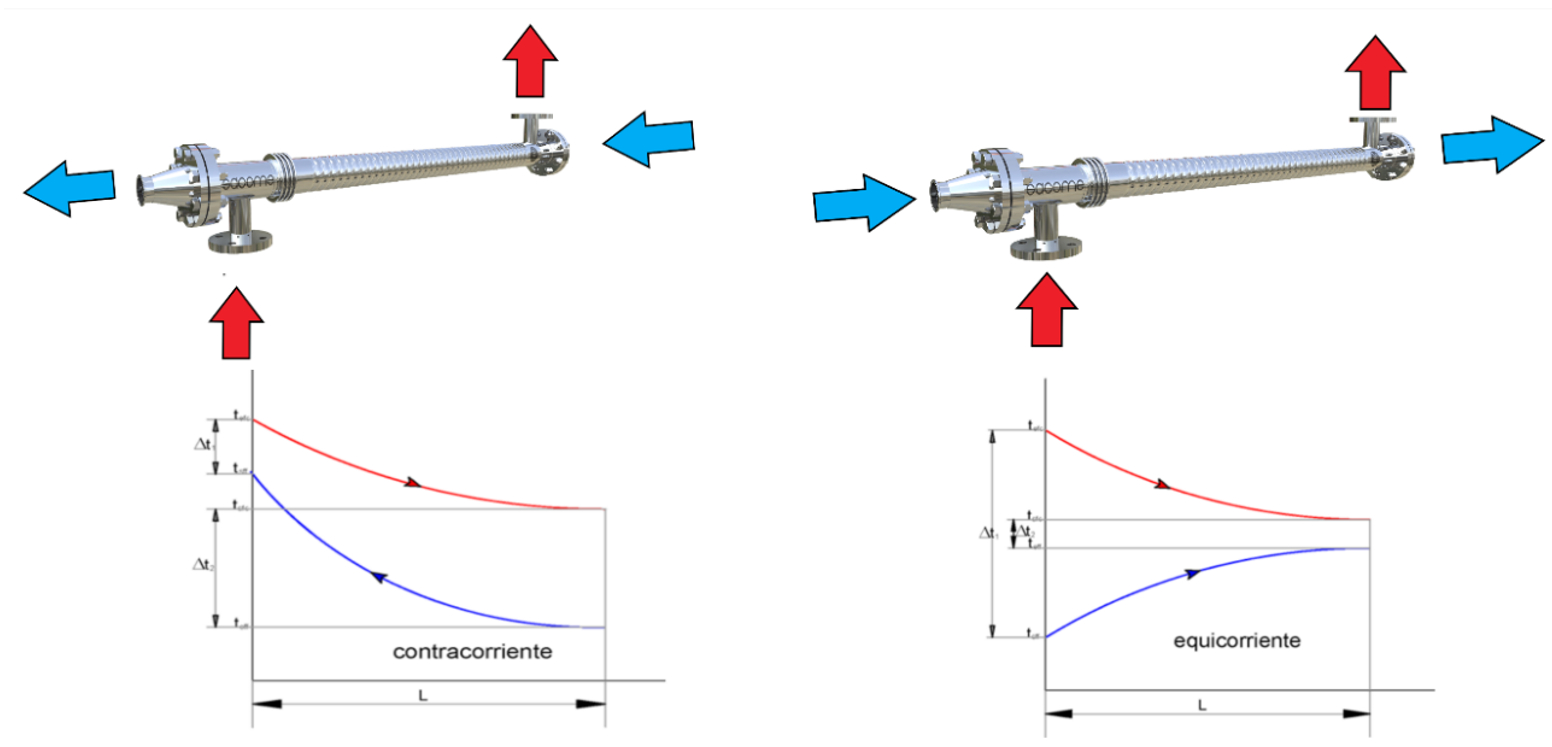
Countercurrent and equicurrent layout.
Except in some very specific applications, a heat exchanger is more efficient when installed in countercurrent, as this arrangement achieves a greater average logarithmic temperature difference (LMTD) between the hot and cold fluids, which translates into higher thermal performance and, therefore, a smaller exchange surface area required. However, in some specific processes, a co-current arrangement may be preferable, so our Technical Department will recommend the best solution for your particular case during the design phase.
That said, when the customer proceeds with the installation and commissioning of the equipment, they may mistakenly arrange the service inlets and outlets incorrectly, in which case the equipment may be installed in countercurrent instead of countercurrent, which, for the reasons explained above, may have a negative impact on the performance of the heat exchanger.
To illustrate this situation, let’s look at an example. In the thermal calculation below, we reproduce a process calculated in countercurrent:

Countercurrent calculation.
Now we will simulate the same exchanger with the same process, but this time we will consider a cross-flow arrangement:

Equicurrent calculation.
As we can see, the equipment goes from being able to perform the process perfectly (since the excess area is 14.92%) to having a negative excess area (-29.33%), meaning that there will be insufficient exchange area and the temperatures cannot be reached. The explanation for this is that the average logarithmic temperature difference (shown as EMTD in the spreadsheets) is reduced from 26 °C (for countercurrent) to 16 °C (for equicurrent), reducing the thermal performance of the equipment.
In practice, to avoid this type of problem, it is sufficient to respect the layout of the inlets and outlets shown in the manufacturing plan that we send to the customer, which in the vast majority of cases corresponds to a counterflow layout.
2. Overpressures due to a poorly designed closed water circuit.
There are various reasons why unusual overpressure can occur during the operation of a tubular heat exchanger, such as water hammer or overheating of one of the working fluids, among others. This overpressure can lead to plastic deformation, partial or total rupture of the jacket or inner tubes, or collapse of the bellows, effects that can render the equipment unusable.
In this regard, we have attached some typical photos of heat exchanger collapse and, in particular, of the expansion joint, due to overpressure on the jacket side:
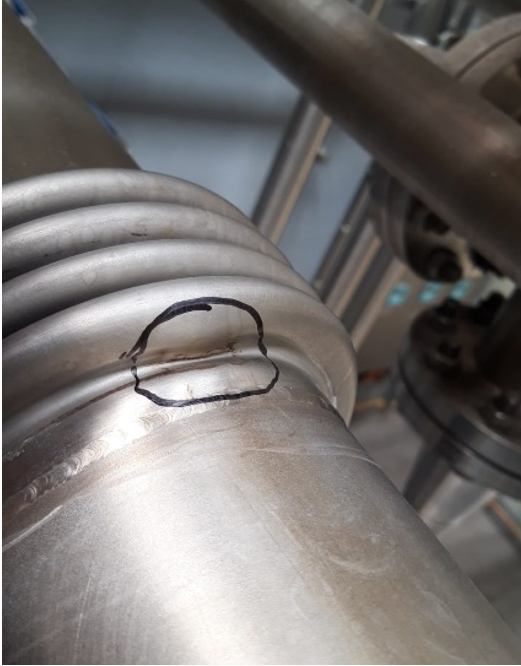
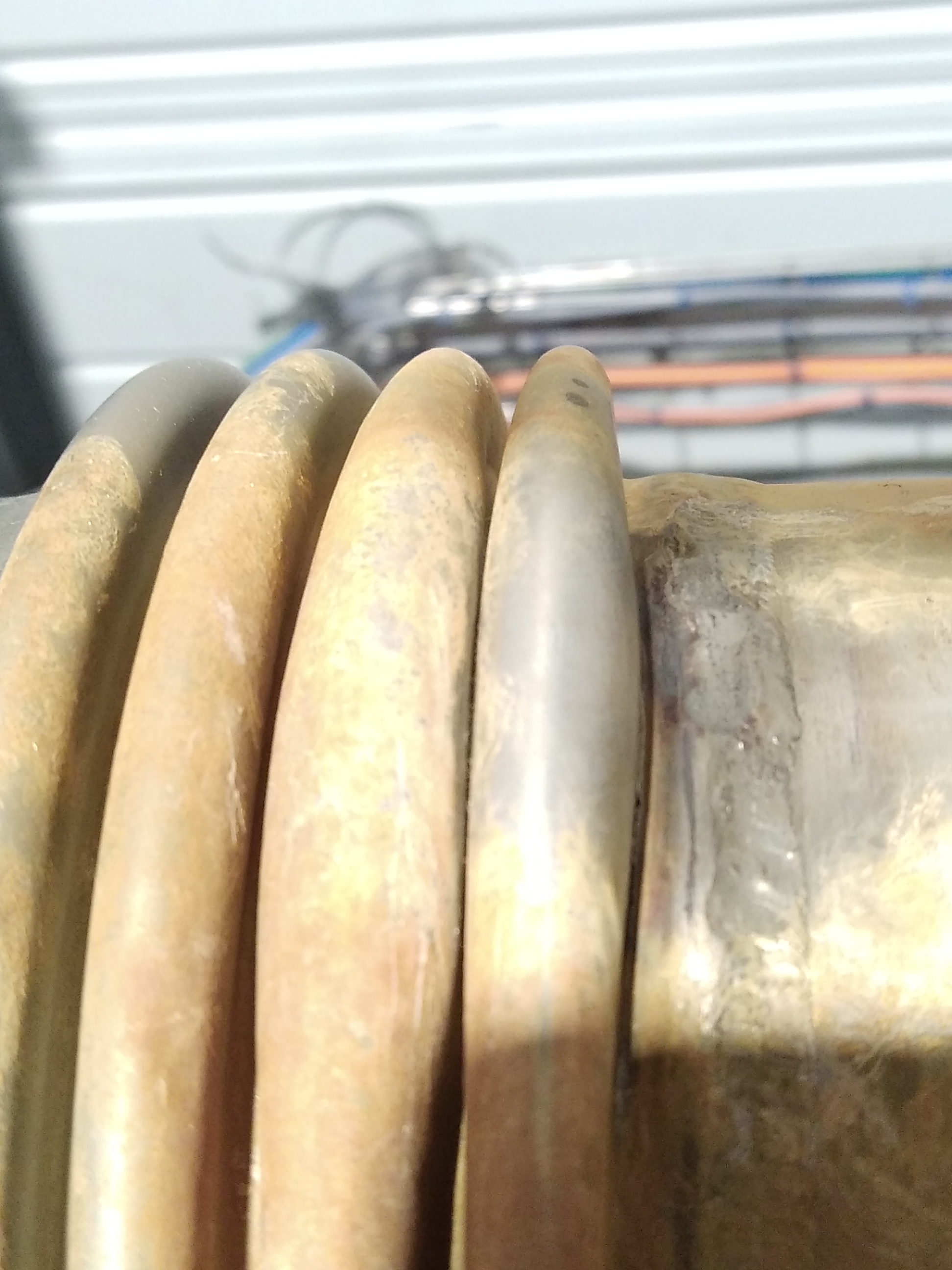
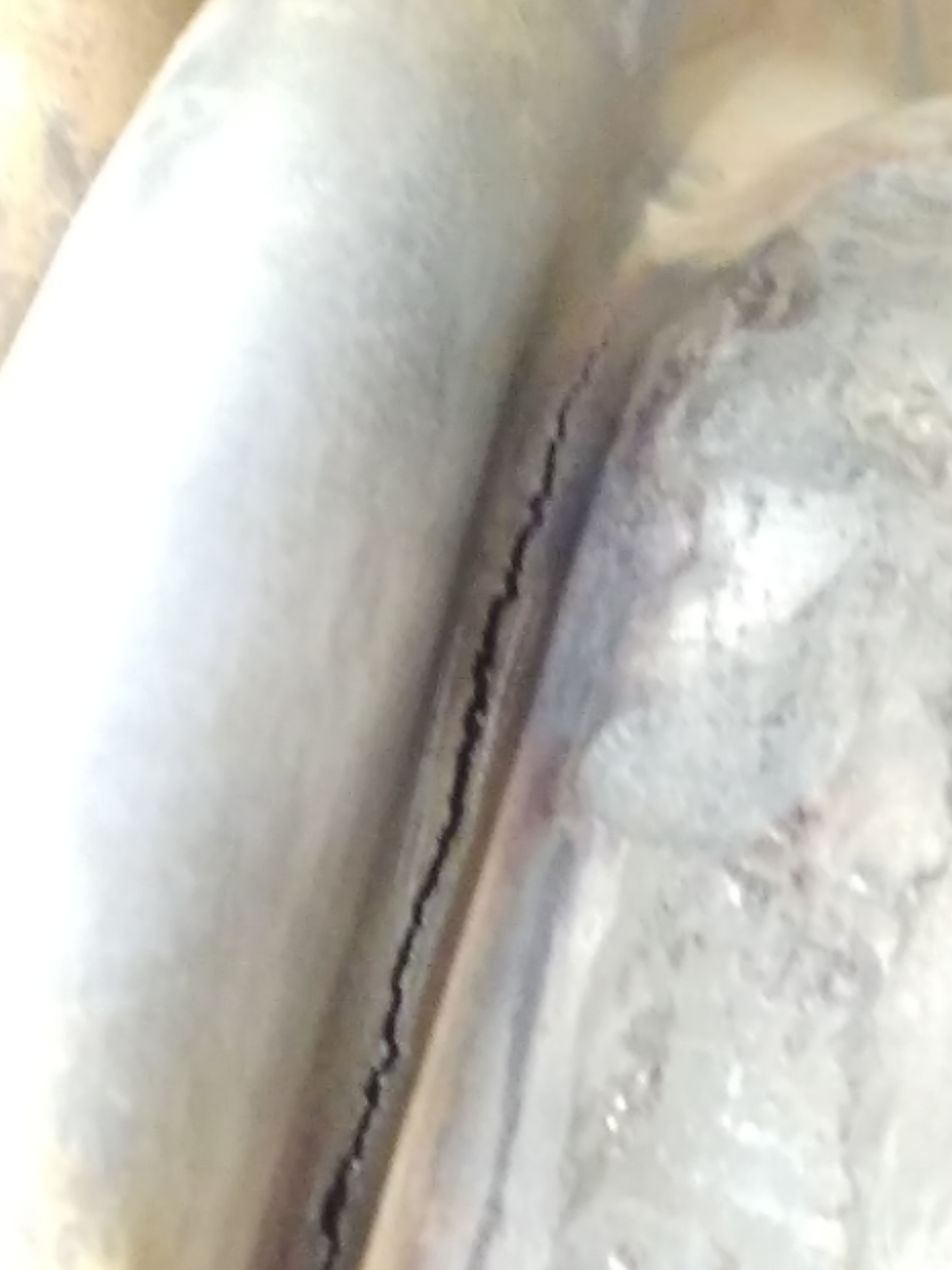
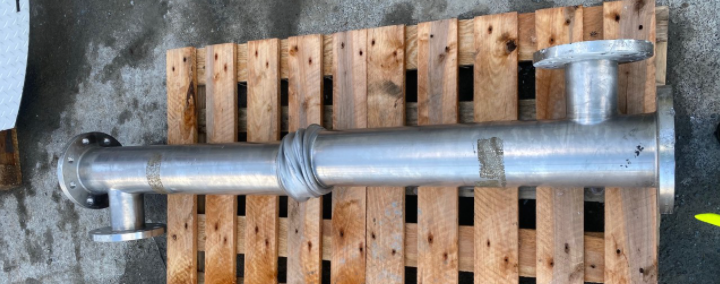
Details of expansion joints deformed
and cracked due to overpressure on the jacket side.
In the case in question, overpressure in a poorly designed hot water circuit, it is essential to install an expansion tank or vessel in the closed water loop. This component has the function of absorbing the increase in pressure of the heat transfer fluid (e.g. water or glycol water) when it is heated. As the temperature of this fluid increases, its volume also tends to increase, and if the fluid is in a closed volume and there is no component that can absorb this expansion, significant overpressures will occur that can cause elements such as the expansion joint or the inner tubes of the exchanger to collapse.
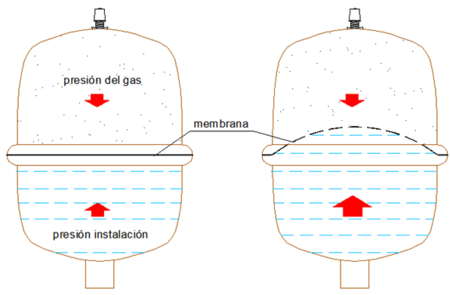
How an expansion tank works.
Below is a typical diagram of a closed water loop where, among other necessary components such as pumps, pressure gauges, valves, drains, and sight glasses, we can see the expansion tank or vessel. This is a typical installation in heat recovery processes in a plant.
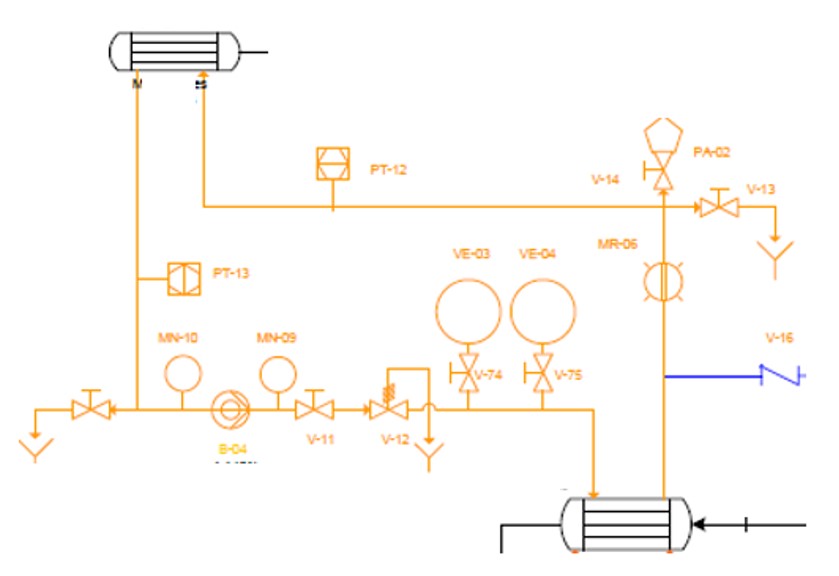
Components of a closed water loop.
3. Locking the supports.
Depending on the layout of the equipment (horizontal or vertical installation, one or more modules in series, etc.), the exchanger can be supported or mounted on the foundation in one way or another. For example, in the case of a single module with a horizontal layout, it can be supported on two cradles or support legs, as shown in the following figure:
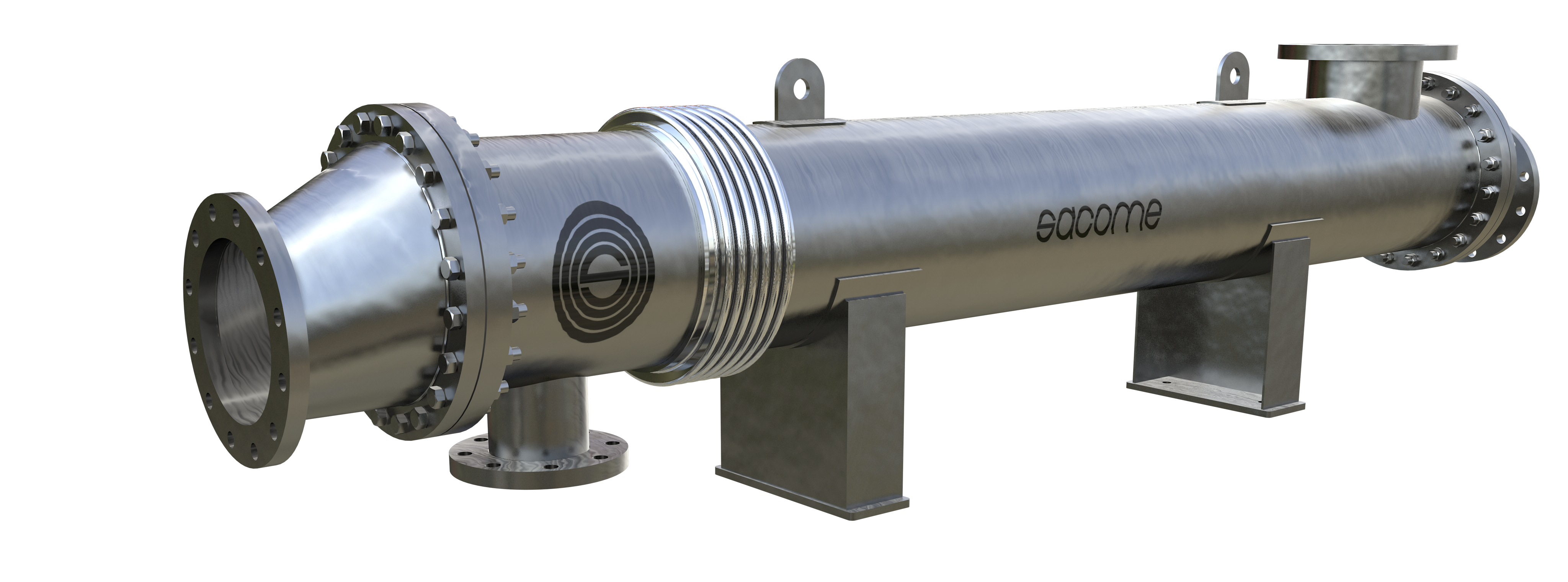
Exchanger on 2 support legs.
If the floor fixing bolts are anchored in such a way that they do not allow movement, excessive stress will be exerted on the expansion joint and on the tube-to-plate welds, which may cause cracks in these welds. Bearing this in mind, if the exchanger is fixed at two points, one of them should be left sliding or in such a way as to allow free expansion.
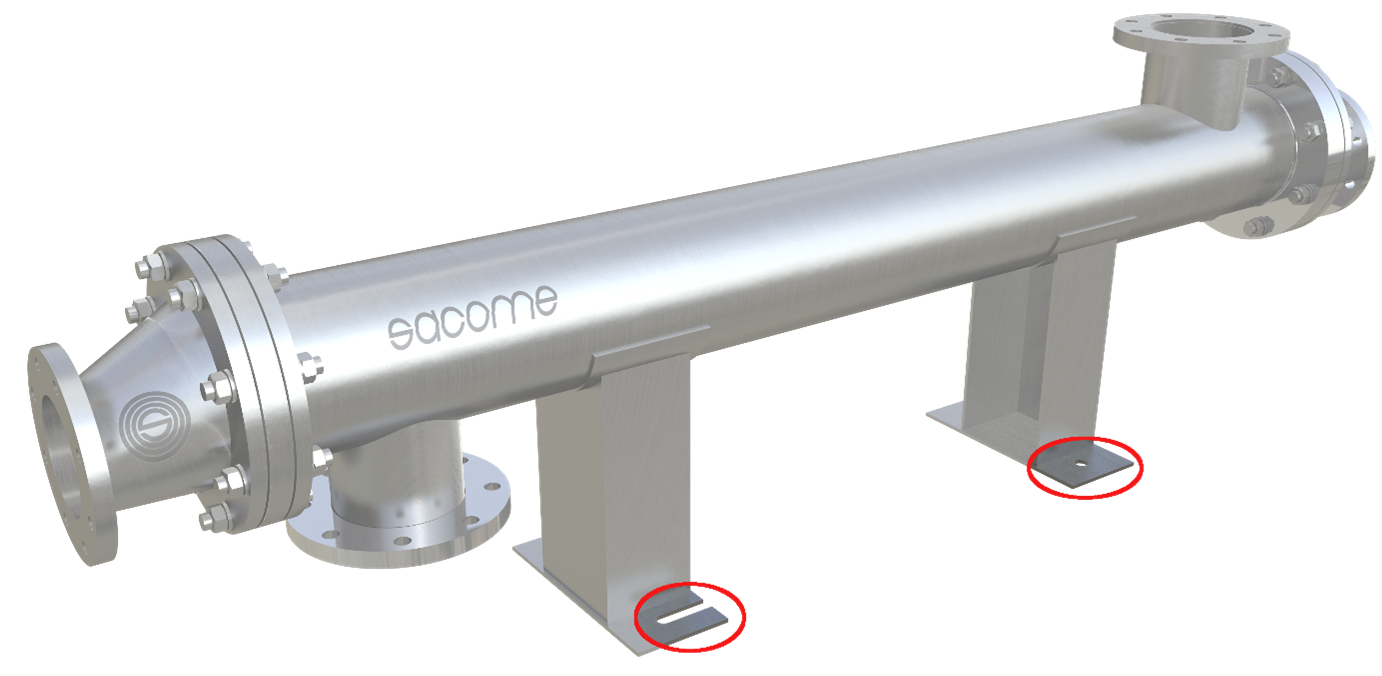
Detail of supports that allow free expansion.
In many cases, the support or frame is included in the scope of supply, in which case we already take these construction details into account. However, if this is not the case and the customer decides to do it by other means, it is important that the installation company takes these details into account in order to avoid tension (and possible breakage) in the equipment. This is one of the recommendations included in our instruction and operation manual.
4. Poor design of the condensate line.
In a condenser or water/steam exchanger, if condensate is not properly drained, the casing side may begin to flood, causing the steam to hit the liquid layer and cause loud noises and vibrations. To detect this anomaly, simply touch the top and bottom of the equipment casing once it is operating with steam. If the top is hot and the bottom is cold, the casing may be flooded to the point where the surface temperature changes. This anomaly is one of the types of water hammer that can occur in a process line.
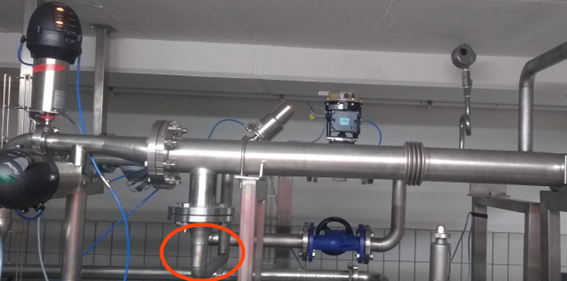
Detail of a poorly designed condensate drain line.
5. Excessive fouling.
Fouling is a phenomenon that reduces the heat transfer coefficient, increases pressure drops, and can even activate and accelerate corrosion processes. There are different fouling mechanisms: crystallization (typical in very hard water rich in salts such as calcium carbonate, lime), sedimentation (deposition of sand, rust or other suspended solids), chemical (in processes where the product can be degraded by temperature), freezing (when a fraction of the product freezes due to process temperatures), biological (when untreated water is processed, allowing different types of organisms or microorganisms to proliferate), protein precipitation (typical in milk products), among others.
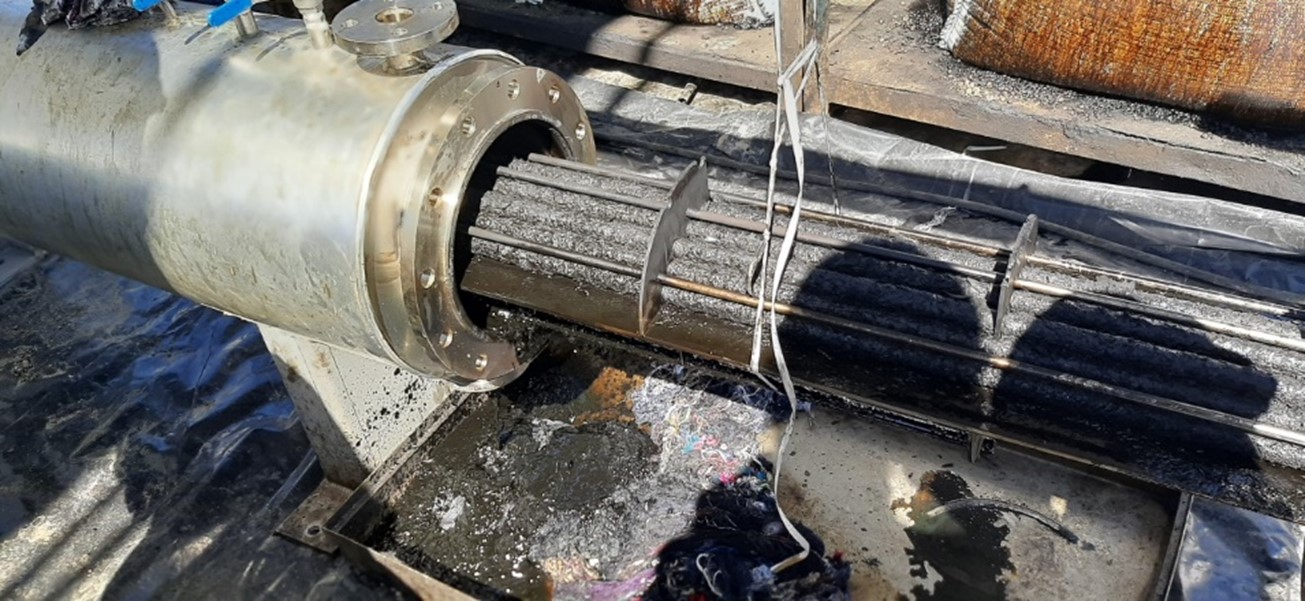
Example of fouling on the jacket side.
Given the complexity of this phenomenon, the solution is not usually straightforward and often involves different aspects. In order to minimize the problem and increase production times between cleanings, the following actions can be taken:
- When performing the thermal calculation, a high excess area can be considered or fouling factors can be introduced as a safety factor. This will give the equipment a margin for fouling and still achieve the temperatures.
- Circulate the “dirtiest” fluid on the tube side, which is easier to clean than the jacket side.
- Design the equipment to ensure a high process speed for the process fluid, minimising fouling.
- Have a flanged tube sheet design so that the reduction or head can be removed if necessary to access the tube side.
- If dirty fluid circulates on the jacket side, opt for a removable tube bundle design.
6. Product properties different from those considered during the design phase.
This is not a fault that we can associate with incorrect installation or commissioning, but rather a design error. However, given that it can sometimes be underestimated, we believe it is appropriate to include it in this article.
In order to correctly simulate the thermal calculation of a heat exchanger, it is essential to know as accurately as possible the thermal properties of the fluids circulating on both the tube side and the jacket side.
The main thermal properties are density, specific heat, thermal conductivity, and viscosity or viscosity curves, depending on whether the fluid is Newtonian or non-Newtonian.
At SACOME, we have a considerable database of more than 600 fluids. Furthermore, thanks to our close collaboration with laboratories at various universities, if the product to be processed is new to the market or our customer is unaware of the parameters mentioned above, we can carry out property tests in their laboratories. This provides us with a very solid basis on which to calculate the most suitable equipment for the customer’s needs.
Below, we will illustrate with a simple example the influence that the variation of some of these parameters can have on the performance of a heat exchanger.
Given a random temperature program, this is the thermal calculation of a piece of equipment for which we have assumed that water circulates on both the jacket side and the tube side:
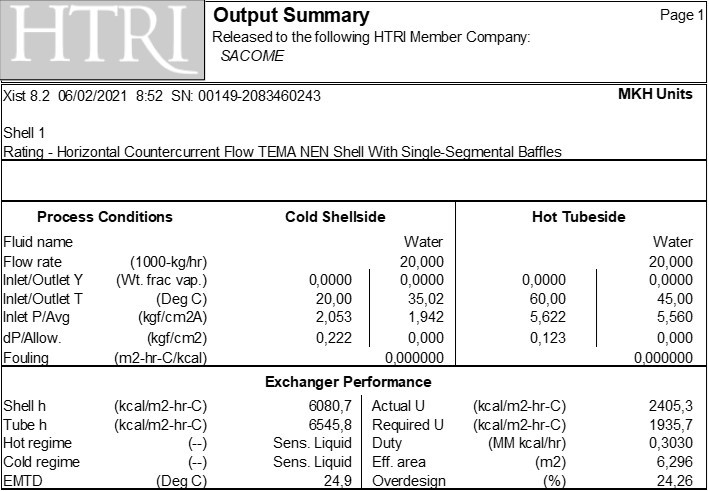
Calculation with water.
And this is the calculation for the same heat exchanger, but in this case the fluid has a viscosity of 5 cP, similar to the viscosity of certain juices:

Calculation with a juice with a medium viscosity of 5 cP.
As can be seen, the calculation with the more viscous fluid gives a clearly negative excess area, and there would be insufficient exchange area to carry out the process. On the other hand, in the first case (product with the viscosity of water), the process would be carried out perfectly. In order to avoid this type of problem, it is important to provide our Technical Department with all available information on the products to be processed so that our technicians can determine the appropriate thermal properties.
Given the importance of this issue, we have dedicated a technical article to address it in greater depth:
7. Corrosion caused by using a cleaning fluid that is too aggressive.
Fouling in a heat exchanger is a complex phenomenon that can lead to different types of deposits and incrustations, such as oil and grease deposits, limescale, different types of organic deposits, sludge, or metal oxides. When performing chemical cleaning (Cleaning-in-Place or CIP for short), cleaning solutions with different agents and concentrations can be used, such as hydrochloric acid (HCl), phosphoric acid (H3PO4), nitric acid (HNO3), citric acid (C6H8O7), caustic soda (NaOH) and different polyphosphates (such as NaPO4 or Na3PO4).
Some of these agents are very aggressive, which, combined with the temperatures at which such chemical cleaning is usually carried out (normally between 60 °C and 80 °C), can cause corrosion problems (generalized or localized, such as pitting or crevice corrosion) in the heat exchanger’s construction material.
Below are some basic guidelines to keep in mind when performing CIP cleaning:
- Consult a specialized company about the cleaning products and concentrations to be used, as well as the cleaning protocol, taking into account the construction material of the exchanger, both the tubes and the joints.
- Only circulate cleaning products and concentrations following the recommendations of this specialized company. Products such as hydrochloric acid (HCl), phosphoric acid, nitric acid, among others, can be very aggressive at high temperatures.
- Once the chemical cleaning cycle is complete, it is advisable to rinse thoroughly with water. Otherwise, the solution may settle and increase the concentration of the cleaning agent in certain areas of the equipment, increasing the risk of corrosion.
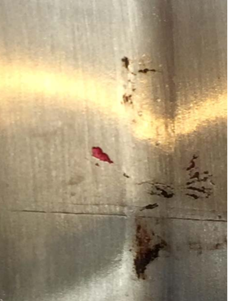
Start of corrosive attack.
8. Corrosion due to the use of service water with a high chloride content.
Sometimes the customer uses untreated or low-quality service water with high ppm levels of salts and chloride ions, which, combined with high process temperatures, can lead to localized corrosion if the quality of the stainless steel used is not adequate.
The image shows the jacket inlet connection of a piece of equipment with service water with high hardness and ppm of Cl-, which has caused heavy fouling and initiated corrosion of the tubes.
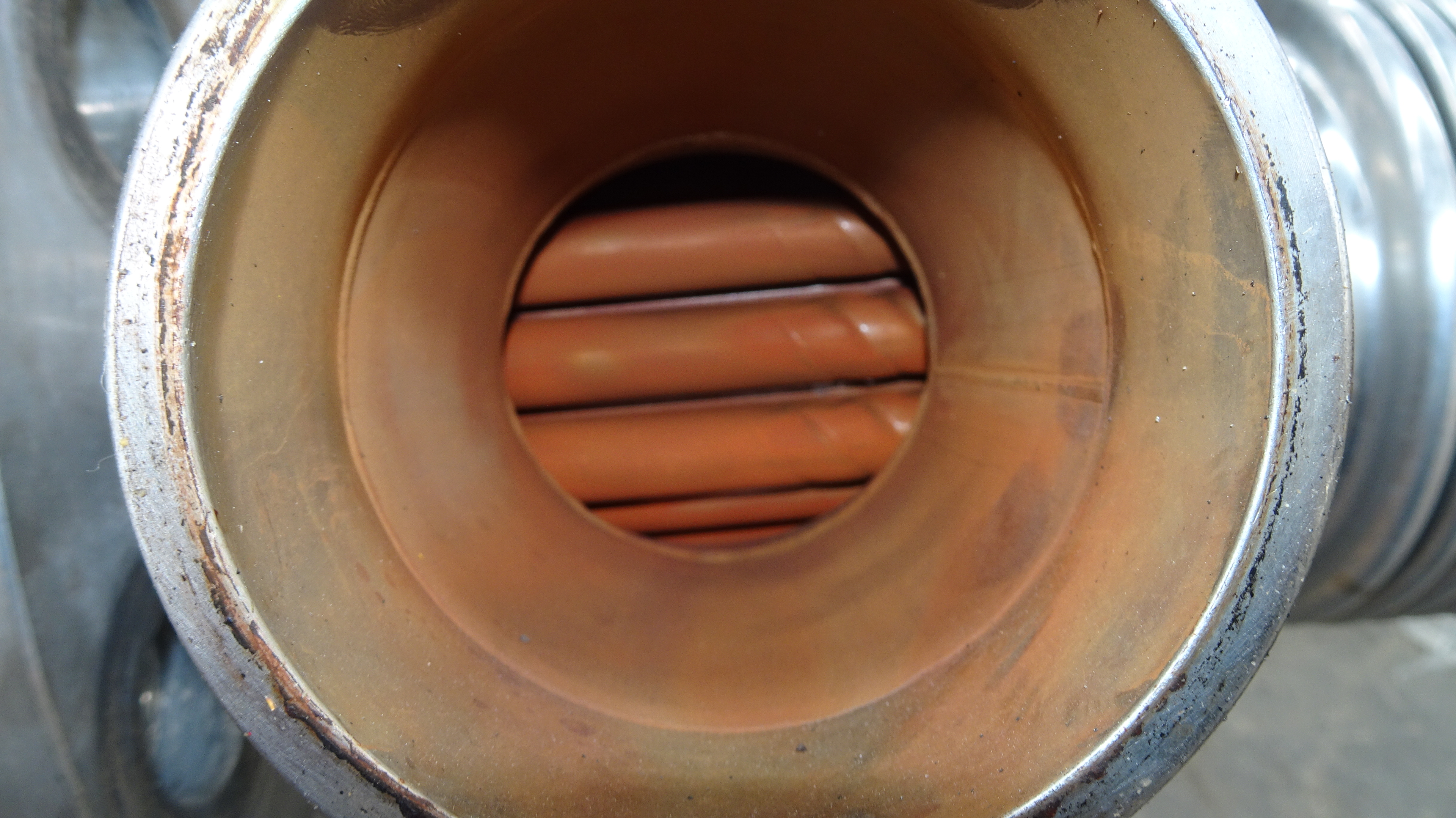
Detail of the service inlet of a unit with untreated water.
9. Freezing of product.
If, when the system is stopped, the units are not completely drained, leaving fluid inside, and the ambient temperature drops below 0ºC, there is a risk of freezing of this stagnant product, which can damage the heat exchanger tubes. We therefore recommend that drain valves be installed at the lowest points of the installation. The image shows a unit collapsed by water that has been trapped inside and has solidified when the temperature dropped below 0ºC.
Collapse of a pipe due to freezing of retained water.
Another possible solution is to use solutions with antifreeze (for example, propylene glycol in an appropriate proportion), which has a lower freezing point than water.
For all of the above reasons, we recommend that our customers follow the recommendations of our Technical Department and the procedures set out in our instruction and operating manual.
Technical documentation on our heat exchangers

New mathematical models applied to heat exchangers
Our study of “New mathematical models applied to heat exchangers” has been recognized as a “Research and Development Project”.

Loops of Purified Water (PW) and Water for Injection (WFI)
Heat Exchangers for loops of Purified Water (PW) and Water for Injection (WFI) in the pharmaceutical and biotechnology industries.

The importance of rheology in the design of food plants
The importance of rheology in the design of any processing plant is crucial since the sizing of many of the elements composing it is very dependent on this “resistance”, also taking special relevance with food products: heat exchangers, pipes, valves, pumps, mixers, etc.