Importance of waste recovery process
Why go for waste recovery?
In recent years, waste recovery has become a priority and necessary activity for companies that generate and manage industrial waste. Firstly, because it is in line with the objectives of the 2030 Agenda, contributing to the promotion of the circular economy and the reduction of greenhouse gases. And secondly, because this recovery allows for more sustainable and profitable waste management, as it avoids sending large quantities of rejects to landfills, reducing the economic cost of landfilling or incineration.
In general, we can classify waste recovery into two categories, depending on the objective pursued:
1. Valorisation for obtaining new raw materials.
2. Recovery for the generation of energy.
What is anaerobic digestion?
At SACOME, as specialists in the design and manufacture of tubular heat exchangers and pressure vessels, we have been developing many collaborations over the last 10 years with engineering firms and companies that generate and/or manage different types of industrial waste. Thanks to these collaborations, we have extensive experience in the supply of equipment for the valorisation of organic waste generated in wastewater treatment plants (WWTP), through the production of a biofuel called biogas from this waste.
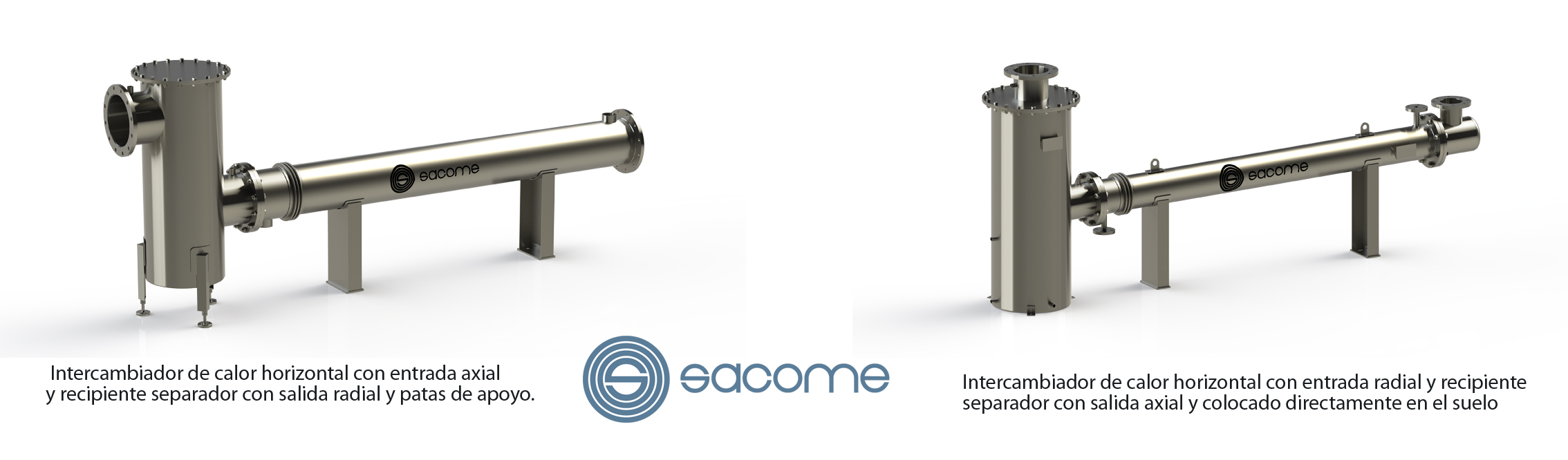
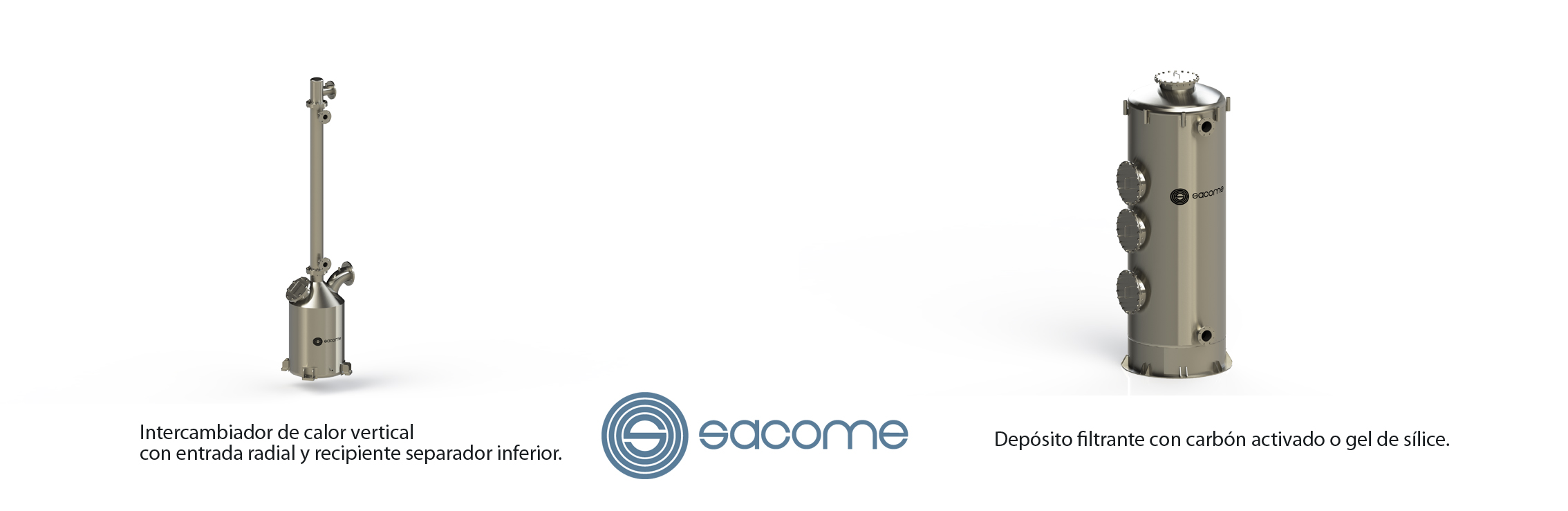
In particular, SACOME designs and manufactures the tubular heat exchangers, separator vessels and filter tanks that are necessary for the conditioning of the biogas prior to its use.
What is the importance of the biogas conditioning process?
A WWTP produces a large amount of organic waste. In order to reduce its volume and limit pollution, this waste or sludge is sent to a device known as an anaerobic digester. In this equipment, the biochemical degradation of the sludge takes place thanks to bacteriological action in a temperature-controlled environment and in the absence of oxygen. This digestion transforms the sludge into biogas, which is a gas with a high calorific value due to its methane-rich composition.
Although the composition of a biogas depends on the nature of the organic waste from which it is generated, the following percentages are characteristic of a biogas obtained in a WWTP:
– Methane: CH4 = 59%.
– Carbon dioxide: CO2 = 34%.
– Oxygen: O2 = 1%.
– Nitrogen: N2 = 1%.
– Water vapour = 5%.
These percentages will be different, for example, in a biogas obtained from waste from a landfill or a swamp, or in a biogas generated from industrial waste of different nature (dairy waste, sanitary waste, etc.). But in all cases, it is always advisable to carry out a biogas conditioning process, as a prior step to its use as fuel in specially prepared engines, which in turn can drive an alternator and generate electricity, which can be fed into the power grid or used for self-consumption.
- METHANE 59% 59%
- CARBON DIOXIDE 34% 34%
- OXYGEN 1% 1%
- NITROGEN 1% 1%
- WATER VAPOUR 5% 5%
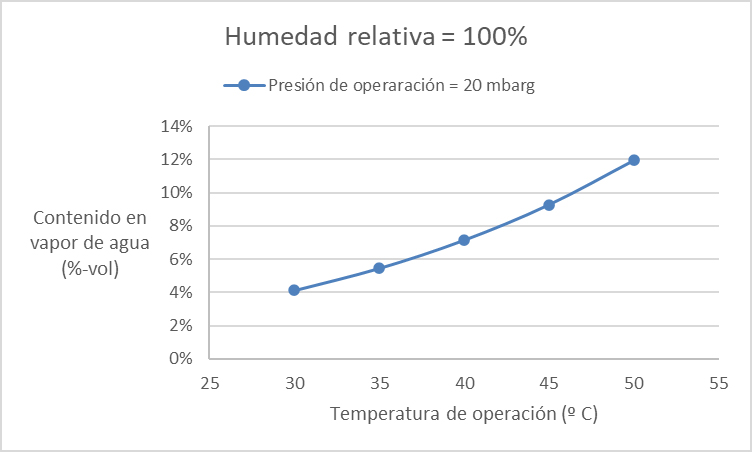
Firstly, biogas has a significant water vapour content, which depends on the degree of humidity (normally 100% in saturated conditions), and on the operating pressure and temperature. The presence of this water vapour is particularly harmful to the engines where this biogas is consumed, but it can also damage the rest of the instruments and equipment in the WWTP valorisation system: blowers, compressors, etc. Similarly, the presence of water vapour can damage other biogas consumers, such as a gas turbine or a steam boiler.
– Siloxanes. These come from silicones that are present in household products such as oils, detergents, shampoos, deodorants, toothpastes, cosmetics, etc. During the combustion of biogas, siloxanes can produce silicates, silica and other crystalline compounds whose incrustations cause abrasive wear on the internal parts of engines.
-Hydrogen sulphide. The presence of sulphur in organic matter and sulphates and/or sulphites in water can produce hydrogen sulphide during anaerobic digestion of biogas. This gas is corrosive to all machinery in the system, and can sometimes act as an inhibitor, or even interrupt biogas production.
– Ammonia. The nitrogen contained in biogas can be in the form of ammonia, which in turn can also inhibit or disrupt biogas production, and form nitrogen oxides (NOx) during combustion.
-Other compounds that can cause corrosion problems:
> Halogenated hydrocarbons: mainly chlorine and fluorine.
> Volatile organic compounds: benzene, toluene, ethylbenzene and xylene, among others.
> Foams.
> Particles in suspension.
> Etc.
Therefore, the conditioning of biogas as a process prior to its use makes it possible to avoid corrosion and abrasion problems in consumer equipment and machines, thus improving their operation and extending their useful life. Furthermore, with this biogas conditioning, it is possible to reduce exhaust gas emissions, in compliance with the strict regulations applicable in this respect.
How is biogas conditioning achieved?
Biogas conditioning therefore consists of the partial or total removal of undesirable components (water vapour and pollutant or corrosive compounds), while ensuring appropriate humidity, temperature and pressure conditions.
To do this, first of all, it is necessary to dehumidify the biogas by cooling it to a temperature that allows the elimination of as much water vapour as possible in the form of condensate. At SACOME we have different types of tubular heat exchanger and separator vessel, depending on the characteristics of the process and the nature of the biogas, in order to achieve an optimum degree of dehumidification.